Infrastructure Manager

Can you read what changed on which server in one place?

As the number of environments grows, the problem stops being capacity and becomes visibility.

How this question is answered today

Every server has its own record. Some have a monitoring tool, some have system logs, some have only a backup history.

Answering "which server did this change reach" means looking in several places. The answer is usually found, but it takes time.

Environments drift apart over time. The difference between test and production grows through small interventions nobody planned.

What that answer costs

Environment drift. It is the usual reason a change that worked in test fails in production.
When one request targets several servers, tracking which of them succeeded one by one.
One server sitting outside the governance scope. It is usually the oldest and most critical one.
Privilege and role changes not counting as changes. Invisible in the record, asked about in the audit.

What governance changes

The server becomes a parameter of governance. One request can target several servers and the outcome for each is recorded separately.

The scope list covers eight paths, and it includes privilege changes and maintenance work. In most organisations those sit outside scope.

Object history is read from the target database itself. A change made outside the system therefore surfaces during comparison.

What changed on which server is readable in one place, and no server is left outside the scope.

The two screens where access lives

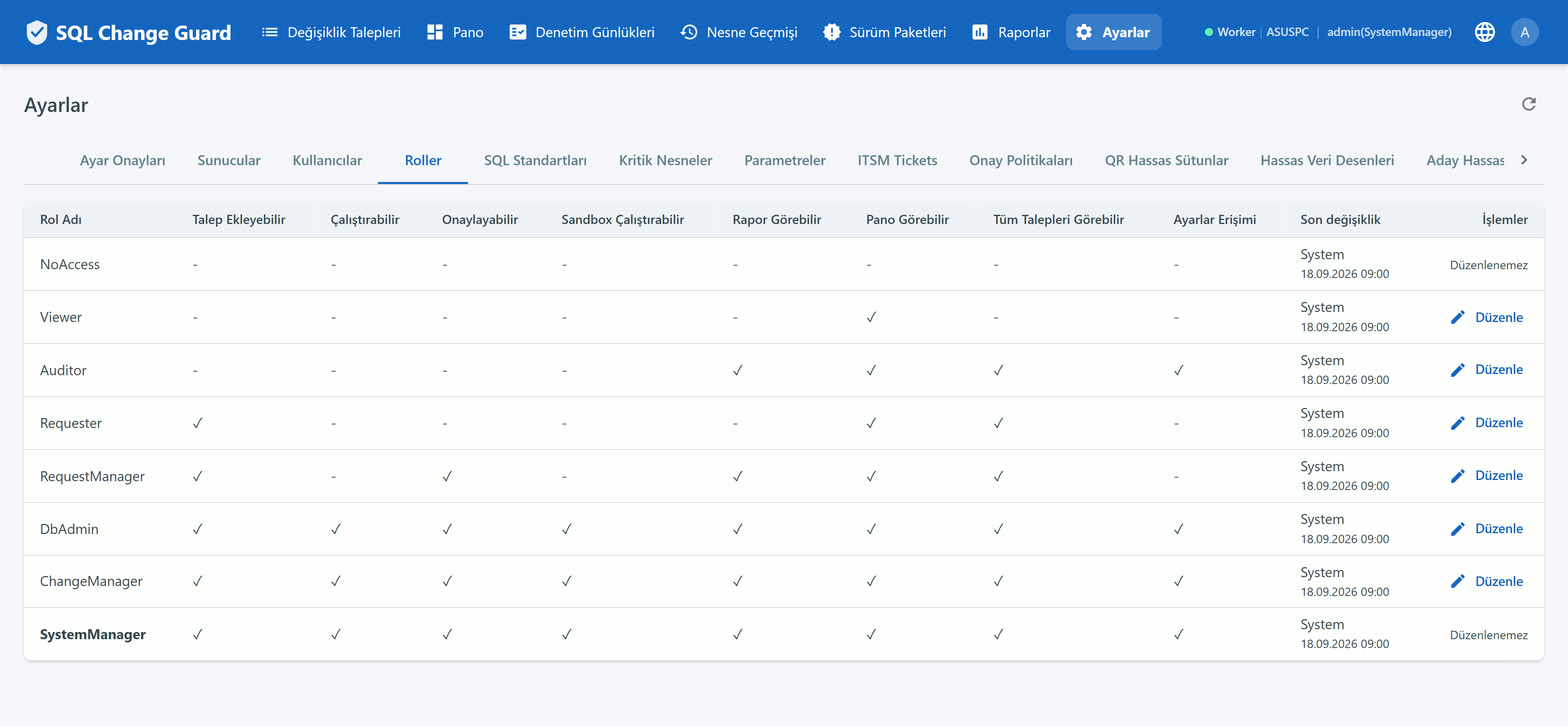
Role permissions screen where request, approval, execution, visibility and settings rights are switched per role
Roles and permissions Requesting, approving, executing and managing settings are switched per role. The check is enforced on the server rather than in the interface.
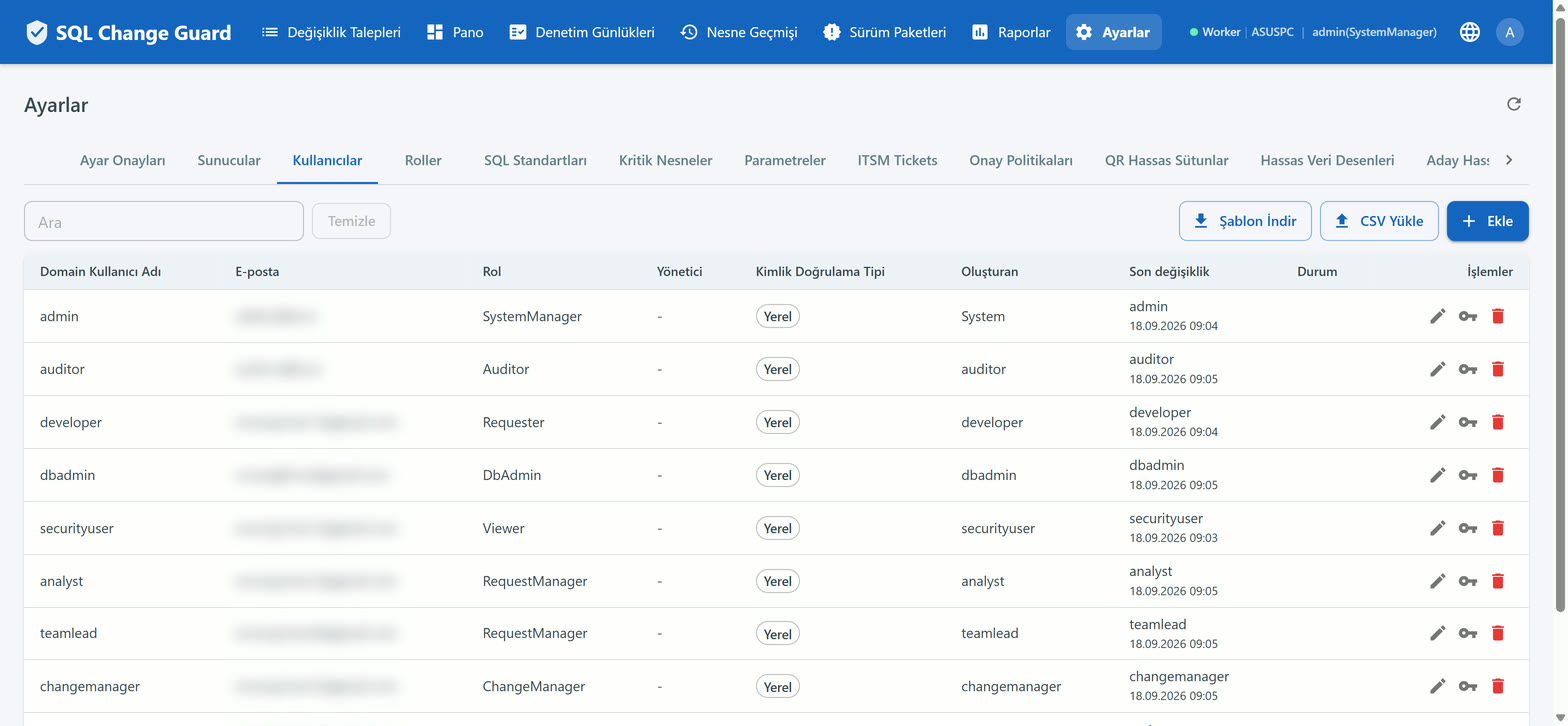
Users screen with role assignment, local or corporate directory authentication and bulk user import from CSV
Users and bulk import A local account or the corporate directory. At setup the whole team is imported from CSV, through the same checks as adding one by one.